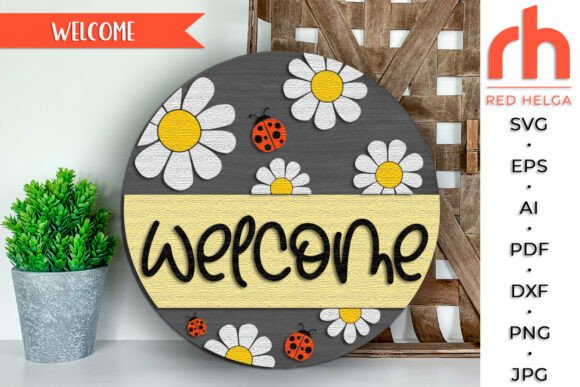
Crafting a Cheerful Welcome: Daisy and Ladybug Door Hanger Design
When you think about setting the tone for your home, the front door is your first opportunity. It's the initial handshake, the visual introduction that says, "This is a place of warmth and character." A well-designed door sign does more than just display a number or a name; it conveys personality. The Daisy Welcome Door Sign, Ladybug Hanger is a prime example of how thoughtful design assets can transform a simple entrance into a statement piece. This layered cut file isn't just a collection of shapes; it's a blueprint for creating countryside charm with modern precision, blending the organic appeal of nature with the clean execution of digital craft.
At its core, this design functions as a display font in three dimensions. The bold, flowing "Welcome" script acts as the typographic anchor, capturing immediate attention with its hand-lettered aesthetic. This script font style is crucial for brand identity in a domestic context—it feels personal, inviting, and human. However, unlike a standard digital font file, this asset is a layered cut file, meaning it relies on physical depth to create visual hierarchy. The foreground script pops against the background, while the daisy motifs and ladybug silhouettes add texture and color. For crafters and small business owners, understanding this layering is key to successful editorial design in physical space. The clean cut lines ensure that even intricate details remain sharp, whether you are working with wood, cardstock, or acrylic.
Practical Applications and Visual Hierarchy
The versatility of the Daisy Welcome Door Sign, Ladybug Hanger makes it a valuable addition to any creative toolkit. While its primary function is as a round wooden door hanger, its applications extend far beyond the entryway. For those in the small business sector, particularly those selling at craft fairs or online marketplaces, this design is a ready-made product. You can easily adapt it for garden-themed wall art or housewarming gifts. The design supports a wide range of materials, allowing you to experiment with packaging design principles—using stain for a rustic farmhouse look or bright acrylics for a modern pop-art vibe.
From a graphic design perspective, this asset demonstrates how to manage visual weight without relying solely on typography. The daisies and ladybugs serve as pictorial elements that break up the rigidity of standard web design or print layouts. If you were to use these elements digitally—for instance, creating social media graphics for a garden center or a spring sale—the SVG and PNG formats allow for infinite scalability. You could extract the ladybug silhouette as a standalone icon for a logo or use the floral arrangement to frame text in a newsletter. The file formats included (SVG, DXF, EPS, AI, PDF, PNG, JPG) ensure compatibility across almost any workflow, from Cricut Design Space to Adobe Illustrator, making it a truly premium font and design bundle.
Designing for Audience Engagement
Why does a specific design like the Daisy Welcome Door Sign, Ladybug Hanger resonate so strongly with an audience? It comes down to psychology and context. The imagery of daisies and ladybugs evokes feelings of spring, growth, and a gentle countryside aesthetic. This is not aggressive, high-energy marketing; it is modern typography and design used to create a sanctuary. For homeowners and interior decorators, this sign acts as a signal of care and attention to detail. It tells visitors that the space behind the door is curated and welcoming.
For entrepreneurs, using such specific thematic elements helps in targeting a niche market. A generic "Welcome" sign blends into the background, but a layered, three-dimensional piece with specific flora and fauna creates a memorable brand identity. It demonstrates an understanding of seasonal trends—a core component of effective marketing. Whether you are a blogger documenting a spring porch makeover or a publisher creating content for a DIY magazine, referencing specific, high-quality design assets like this adds credibility to your work. It moves your content from generic advice to actionable, expert guidance.
Technical Execution and Customization
Working with a layered door sign cut file requires a different mindset than simply typing on a page. It involves considering material thickness, color theory, and assembly order. The Daisy Welcome Door Sign, Ladybug Hanger is designed with "clean cut lines," which is a technical specification that translates to user-friendliness. It minimizes the need for weeding (removing excess material) and reduces the risk of tearing delicate elements.
When evaluating this design for your projects, consider the following practical steps:
- Material Selection: The design works on wood, MDF, acrylic, and heavy cardstock. The choice of material will dictate whether the final piece feels like rustic farmhouse décor or sleek modern design.
- Color Palette: While the preview suggests specific colors, the beauty of a cut file is customization. You can paint the daisies in monochrome for a minimalist look or use ombre techniques for a watercolor effect.
- Layering Strategy: Decide if you want a flush look or high-dimension spacers. Using foam tape between layers can accentuate the visual hierarchy, making the "Welcome" text stand out even more.
Ultimately, the Daisy Welcome Door Sign, Ladybug Hanger is more than just a Cricut cut file; it is a tool for creative expression. It bridges the gap between digital precision and handmade warmth. By understanding its design features—the interplay of the script font, the organic silhouettes, and the structural layers—you can leverage this asset to create products and spaces that feel both professional and deeply personal. Whether for your own home or as part of a commercial venture, it offers a reliable foundation for spring-themed creativity.